
|
OTHER BINOCULARS #22 & OPTICAL SIGHTS/ MOSTLY MILITARY |

|
NON MINIATURE BINOCULARS AND OPTICS: MOSTLY MILITARY |





|
NEWLY ADDED ITEMS ARE MONTHLY INSERTED THROUGHOUT THESE SECTIONS AND NOT NECESSARILY ON THE LAST PAGE. Redirected search such as google image may display old content or distortion: try a refresh and or go directly to the site : http//www.miniaturebinoculars.com |


|
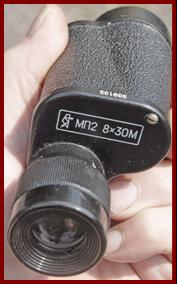
KOMZ ( Казанский оптико-механический завод / Kazan Optical Mechanical Factory) Russian 8x30 Monocular |
|
I acquired my KOMZ ( Казанский оптико-механический завод / Kazan Optical Mechanical Factory) Russian 8x30 monocular in an on line auction for $15 because the vague listing talked about a grid and I thought it might be military. No grid, and not military, but at $15 and like new condition it is interesting good quality Soviet optics at a time of finding few optics I don’t have and want, and perception of escalating prices, and may be a Russian home market item because of Cyrillic markings/ no English, and no “made in xxx” export marking. |

|
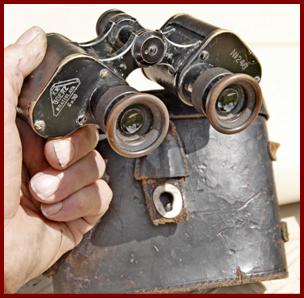
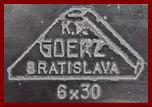
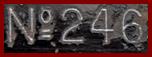
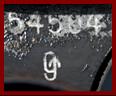
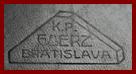
KP. Goerz Bratislava military 6x30 binoculars with strichtplatte/ graticule/ range grid made in Bratislavia (Slovakia) serial number 54504, issue number 246. |
|
My post WWI Goerz Bratislava military binoculars with graticule were made at the K.P Goerz factory in the city of Pressburg (German) Pozony (Hungarian) Bratislava (Slovak) The Goerz Bratislavia factory was established in 1908 by C.P. Goerz, and is known to have produced military binoculars for the Finnish, Czech, Serbian, Austro Hungarian and probably other armies. My example has a K.P. Goerz Bratislava marked case. |
|
RECENT MILITARY/ OTHER BINOCULARS ACQUISITIONS THE GOAL OF THIS WEBSITE HAS ALWAYS BEEN TO ADD AND DOCUMENT INTERESTING BINOCULARS, WHENEVER POSSIBLE. RECENT ACQUISITIONS ARE OFTEN PLACED NEAR SIMILAR PREVIOUSLY SHOWN ITEMS (such as new Dutch Army binoculars added next to previously shown Dutch Army binoculars), AND NOT ON THE LAST PAGE OF THE OTHER BINOCULARS SECTIONS. SO I DECIDED TO LIST RECENT ACQUISITIONS AND WHERE THEY ARE FOR VIEW ERS WANTING TO SEE MY NEW ADDITIONS , GIVEN THAT MANY ARE RARELY SEEN.….
6/2026: TOKO 6X25 WWII JAPANESE MILITARY BINOCULARS: OTHER BINOCULARS #12 9/2026: RUSSIAN KOMZ MONOCULAR: OTHER BINOCULARS #22 9/2026: ZEISS NEDINSCO DUTCH MILITARY DVO BINOCULARS: OTHER BINOCULARS #1 9/2026: GOERZ DF03 DIENSTGLAS GERMAN MILITARY REGIMENT MARKED BINOCULARS: OTHER BINOCULARS #22 9/2026: STEINHEIL FKF DANISH MILITARY BINOCULARS: OTHER BINOCULARS #7 9/2026: 1922 ZEISS NEDINSCO DELTRENTIS 8X30 BINOCULARS: OTHER BINOCULARS #1 9/2026: K.P GOERZ BRATISLAVA 6X30 MILITARY BINOCULARS: OTHER BINOCULARS #22 9/2026: GOTO KOGAKU JAPANESE WWII NAVY BINOCULARS: OTHER BINOCULARS #13 92026: TOKYO MORIKO KATORI WWII JAPANESE ARMY BINOCULARS: OTHER BINOCULARS #12 9/2026: U.S. NAVY Bu SHIPS UNIVERSAL CAMERA MKXXXIV MOD 0 WITH USN ISSUE PAPERWORK: OTHER BINOCULARS #22 9/2026: EAST GERMAN BORDER GUARDS ZEISS 8X30 MDI BINOCULARS OTHER BINOCULARS #19 9/2026: 1939 NIFE SWEDISH ARMY 6X30 BINOCULARS FROM 1ST YEAR OF PRODUCTION OTHER BINOCULARS #15 9/2026: NTC JAPANESE WWII ARMY BINOCULARS OTHER BINOCULARS #13 9/2026: WWI BAUSCH & LOMB US NAVY BINOCULARS OTHER BINOCULARS #7 10/2026: 1934 KERN SWISS ARMY BINOCULARS OTHER BINOCULARS #3 10/2026: 1952 BULGARIAN ARMY BINOCULARS OTHER BINOCULARS #21 10/2026: WWII LEITZ DIENSTGLAS 6X30 GERMAN ARMY BINOCULARS OTHER BINOCULARS #4 10/2026: UNKNOWN JAPANESE ARMY WWII 6X24 BINOCULARS OTHER BINOCULARS #13 PENDING 10/2026: WWII NIKKO TOKYO NIPPON ORION 6X24 JAPANESE ARMY BINOCULARS OTHER BINOCULARS #13 10/2026: WWII MANCHURIAN JAPANESE ARMY 6X9.3 BINOCULARS OTHER BINOCULARS #12 10/2026: 1917/18 ZEISS DIENSTGLAS DF6X24 OTHER BINOCULARS #22
(A PENDING notation means in transit to me, or not yet photographed and added to the uploaded website as a viewer visible update) |
|
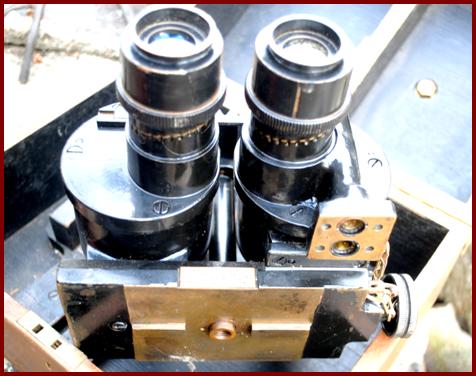
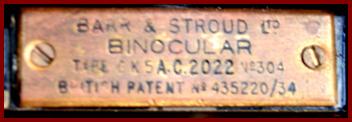
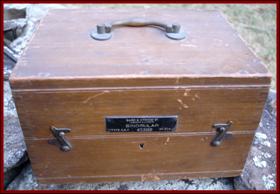
British Barr & Stroud Ltd Type G.K.5 6x42 Naval Artillery Director Binoculars |
|
My British Royal Navy G.K.5 Fire Director binoculars were made by the Scottish Firm of Barr & Stroud Ltd Glasgow. Fire directors calculate the arc of fire (indirect fire) necessary to drop artillery rounds on targets over much longer distances than possible for direct fire (think mortar versus rifle sighting). This is the optical line of sight mechanism which would interact with the distance calculation and gun performance factors and wind factors when attached to the fire director to give elevation and windage settings to the gun crew. Undated, but believed to date in the period WWII to a decade or so after WWII. |


|
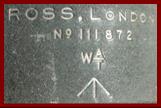
Ross 7x50 Naval Artillery Director Binocular Gunsight Pattern G-352*P |
|
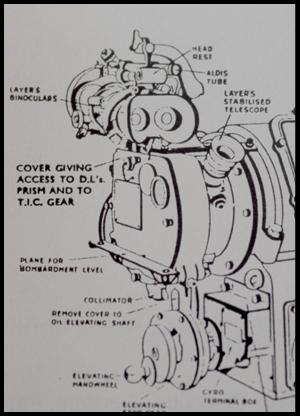
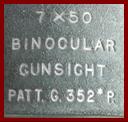
My British Royal Navy pattern G-352 7x50 Fire Director Binoculars were made by the British firm Ross London. They would originally have has a rubber brow pad and eyecup. Fire directors calculate the arc of fire (indirect fire) necessary to drop artillery rounds on targets over much longer distances than possible for direct fire (think mortar versus rifle sighting). This is the optical line of sight mechanism which would interact with the distance calculation and gun performance factors and wind factors when mounted to the DCT (Director Control Tower) fire director to give elevation and windage settings to the gun crew. This particular model of Ross binoculars was illuminated, and has filters of different colors on a rotating disc. And like many Naval optics, these binoculars have desiccant ports with caps. The distance between eyepieces can be adjusted. |
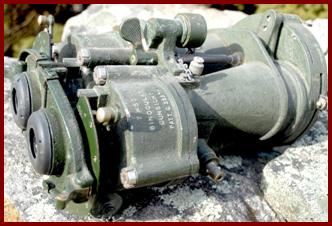
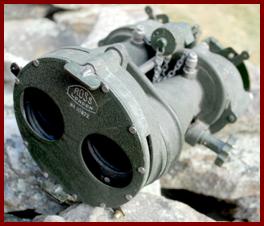
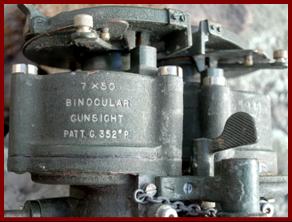
|
A similar model of Ross Artillery Director/ binocular gunsight is shown at right mounted to a Navy Director Control Tower for surface targets These binocular gunsights were also used as fire directors for anti aircraft gun mounts. |



|
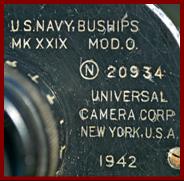
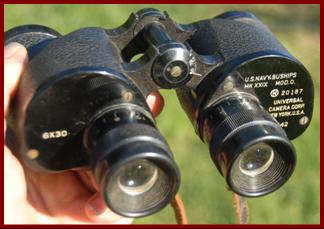
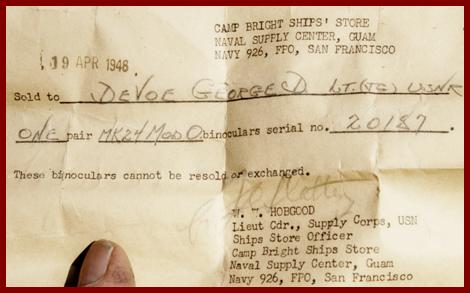
TWO 1942 Universal Camera Co U.S. Navy BU SHIPS 6x30 binoculars MK XXIX Mod 0 , one marked post war to the U.S. Navy Optical School, and the other with 1948 documentation of sale to a U.S. Navy (reserve) lieutenant, through the Guam Camp Bright Navy Stores depot |


|
The U.S Navy established an OM / Optical Man rating in 1943 to provide Navy personnel trained in the repair/ overhaul and service of binoculars, telescopes, range finders, submarine and turret periscopes, navigation optics, night vision optics, fixed prism gunsight telescopes, etc. In 1945 the navy formed the US Navy Optical School at the Naval Station Yorktown for the training of these people. |
|
My 1942 Universal Camera Co U.S. Navy binoculars MK XXX Mod 0 were marked as binocular #17 property of that school. |

|
The documentation that came with my 1942 Universal Camera Co U.S. Navy binoculars MK XXX Mod 0 serial # 20187 says that the Camp Bright Ship’s store of the Naval Supply Center Guam sold these binoculars to George D. DeVoe (Lt. /JC U.S;. Navy reserve) |


|
My binoculars have a stamping I have seen on C.P. Goerz military optics, but cannot fully document. The main markings are metal filled, and there appears to be a contract binocular number/ issue number in addition to the manufacturer serial number. |
|
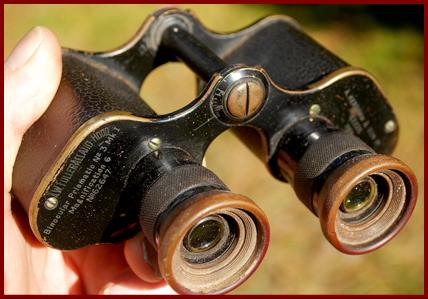
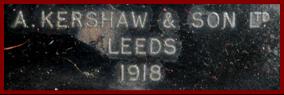
1918 A. Kershaw & Son Ltd WWI British No. 3 Mk1 6x military binoculars |

|
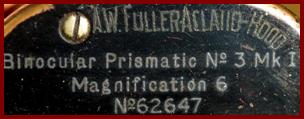
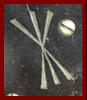
My 1918 WWI Kershaw & Son No. 1 Mk 1 British army binoculars have the facing broad arrow British military property marks indicating release from service. They are marked to A.W. Fuller Acland-Hood, who I believe to be Sir Alexander William-Acland-Hood, (later became 6th Baronet Hood), born in 1901. He went to the Royal Military Academy, and was a lieutenant in the Royal Engineers, and moved to California the USA after WWI. (speculative) |
|
C.P. Goerz DF03 WWI German Dienstglas for Unteroffiziers 6x military binoculars, regiment marked |
|
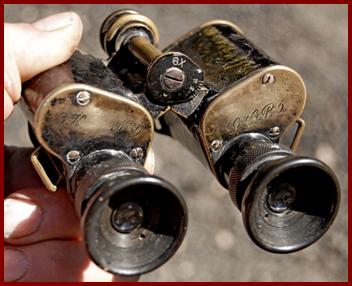
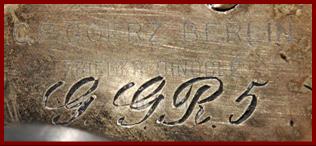
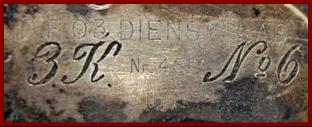
My C.P. Goerx DF 03 German army binoculars are stamped “ D.F. 03 DIENSTGLAS Nr.4 U.F. ” and “ C.P. GOERZ BERLIN TRIEDER BINOCLE D.R.G.M .” “ D.F. 03 ” is Doppelfernhrohr model 1903. DIENSTGLAS nr.4 U.F. is service glass number 4 for unteroffiziers (non commissioned officers”. They are also script engraved “ 3 K No. 6 ” and “ G.G.R.5 ”. I believe that the markings probably indicate binocular No. 6 of the 3rd Kompanie, Garde Grenadier Regiment #5, a regiment of the Prussian army from March 1879 to Dec 1918. |
|
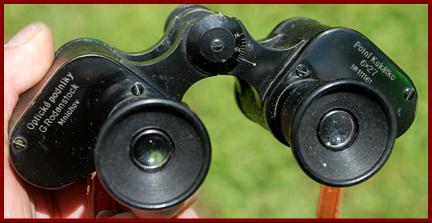
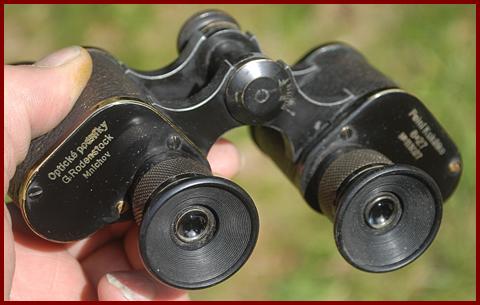
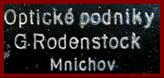
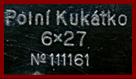
TWO WWII Optick é Podniky (Optical Enterprise) G. Rodenstock German made 6x27 Slovak Republic Army military polni kuk á tko binoculars # 111161 AND G. Rodenstock German made 8x27 Slovak Republic Army military polni kuk á tko binoculars # 113027 |

|
I believe my two Rodenstock binoculars are German manufactured Slovak Republic military binoculars. The Slovak Republic was created in March 1939 as a German supported entity, along with the Protectorate of Bohemia and Moravia, in the segmentation of Czechoslovakia. Slovak Republic military battalions fought alongside the Germans in the Poland campaign, and 45,000 Slovak Republic Army troops fought alongside German units in the Russian campaign. I think my Slovak language marked “Optick é Podniky” (Optical Enterprise) G. Rodenstock “Mnichov” (Munich) 6x27 and 8x27 “polni kuk á tko” (field glasses) were made under contract by the German firm Optiche Werke G. Rodenstock, probably in 1939 or 1940, to equip the Slovak Republic Army. |

|
WWII 1942/ 43 German Army 6x30/ dym Runge und Kaulfu ß Fabrik f ü r Optik Dienstglas binoculars |

|
My WWII dym manufacturer coded 6x30 German military binoculars were made by Runge and Kaufus in Rathenow in 1942 or in 1943, and have a H6400 strichplatte or right side graticule/ ranging grid. The “O” marking indicated the use of 1416 cold weather grease introduced on November 1 1942 (credit Hans Seeger). The manufacturer German name is Runge und Kaulfu ß Fabrik f ü r Feinmechanik und Optik, which also was known under the brand logo of RUKA. These follow the standardized approved pattern of German WWII 6x30 Dienstglas military binoculars. |

|
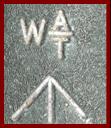
I believe the “W” is the British War Department and combined W plus A over T plus broad arrow represent a standard British War Department acceptance marking. |
|
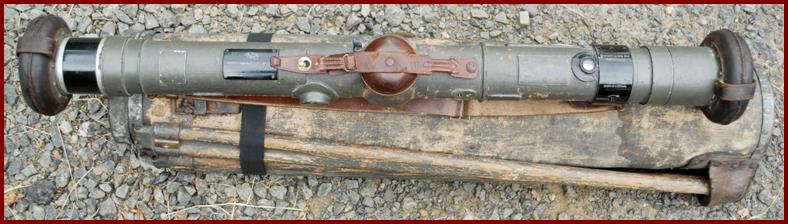
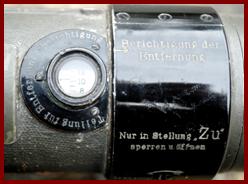
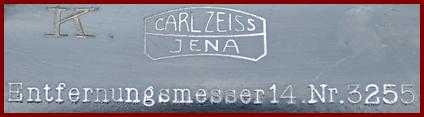
30’s or early WWII Carl Zeiss Jena Entfernungsmesser 14 (Rangefinder 14) Military Coincidence Optical Rangefinder |
|
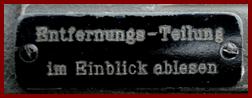
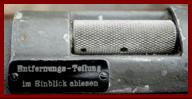
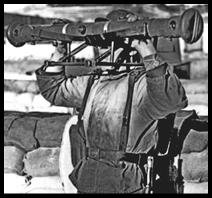
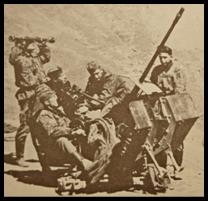
My Carl Zeiss Jena Entfernungsmesser 14 Military Coincidence Optical Rangefinder has control instructions in German, so they were made for the German army (Finnish contract models have the instructions in Finnish). According to the 3/1945 U.S. War Dept. TM-E-30-451 the Entfernungsmesser 14 …”is used by German machine gun and mortar units, and by airborne troops for obtaining the ranges of ground targets. It is also used with the M.G. 34 for antiaircraft fire.” |
|
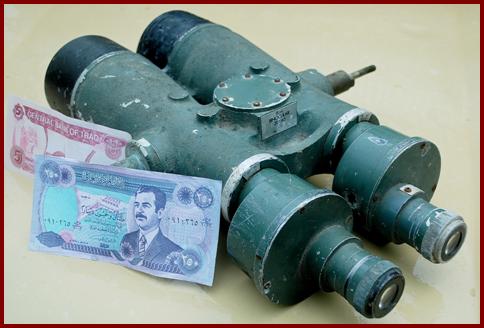
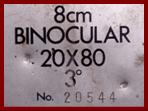
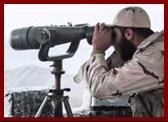
Twice Captured and Battle Damaged Kofuku Sangyo Iranian Army Military 20x80 8cm Border Observation binoculars, captured by Iraqi Soldiers, then captured again by a U.S. |

|
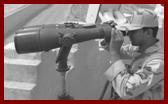
My 20x80 Japanese made Binoculars were assembled by JB88 / Kofuku Sangyo Co. for an Iranian army contract, and are typical of the large observation binoculars Iran used in border emplacements. They were captured by Iraq during the 1980’s Iran/ Iraq conflict, and then recaptured by a US soldier in the 1992 US/ Iraq conflict and brought home to the USA. It is unclear when they were shrapnel damaged. |



|
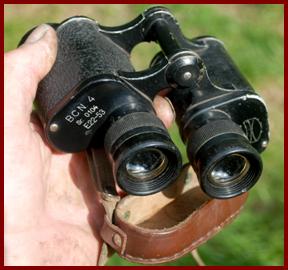
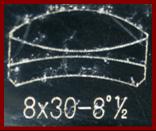
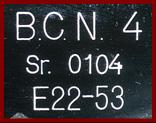
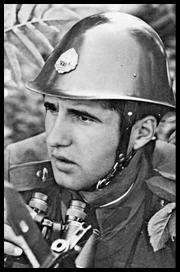
Romanian Army I.O.R. (Întreprinderea Optică Română/ Romanian Opical Enterprises) BC (Binoclu Camp/ Binoculars Field) (Model) N. 4 8x30 Military binoculars with low serial number of 104 |
|
My 8x30 Romanian military binoculars were made by I.O.R. (Întreprinderea Optică Română) in Romania. They are marked B.C. ( B inoclu C amp/ field binoculars) N. ( N um ă r/ number) 4 . They have an extremely low serial number of 0104. They have a right ocular reticule/ ranging grid. I am not presently cognitive of when this model was produced. The 53 might plausibly indicate 1953, but this is purely speculative. Knowledgeable additional information welcome. |
|
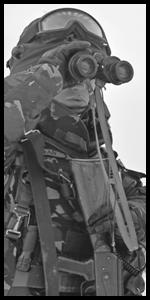
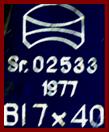
1977 Romanian Army I.O.R. (Întreprinderea Optică Română) 7x40 B1 Military Binoculars w/ IR Filter #02533 |

|
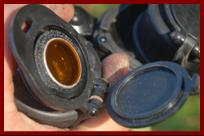
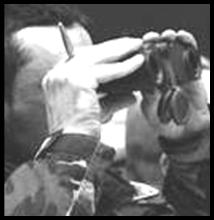
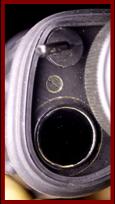
My 1977 7x40 B1 model Romanian military binoculars were made by I.O.R. (Întreprinderea Optică Română)in Romania. This Romanian optical firm was established in 1935 in Bucharest. These binoculars used T3 magnesium fluoride coated lenses manufactured by the German firm Schott Glaswerk GmbH. The left side has a fold out IR filter and an IR detector that are similar to the IR detector used on East German Carl Zeiss NVA binoculars. The objective lens covers contain accessory yellow filters. ( Thanks to Sturm Handels GmbH for picking me out a nice example to purchase to present here). I.O.R. apparently also made a similar B2 marked civilian market model but without IR detector, filters, or objective covers. |
|
Filter system |
|
Some of these IOR 7x40 military binoculars had an active IR detector, and others did not. |
|
IR detector |
|
NEWLY ADDED ITEMS ARE MONTHLY INSERTED THROUGHOUT THESE SECTIONS AND NOT NECESSARILY ON THE LAST PAGE. Redirected search such as google image may display old content or distortion: try a refresh and or go directly to the site : http//www.miniaturebinoculars.com |
|
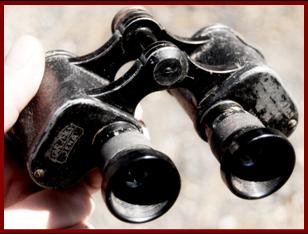
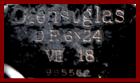
WWI 1917/1918 Carl Zeiss dienstglas 6x24 VII 18 German Army binoculars serial #985562 |

|
I believe that my German Army Carl Zeiss DF6x24 dienstglas binoculars serial #985562 date to 1917/1918. I am unsure of the VII(7) 18 marking. I associate some such markings as indicating a pattern change, and I believe the Zeiss DF had 4 recognizable patterns. |